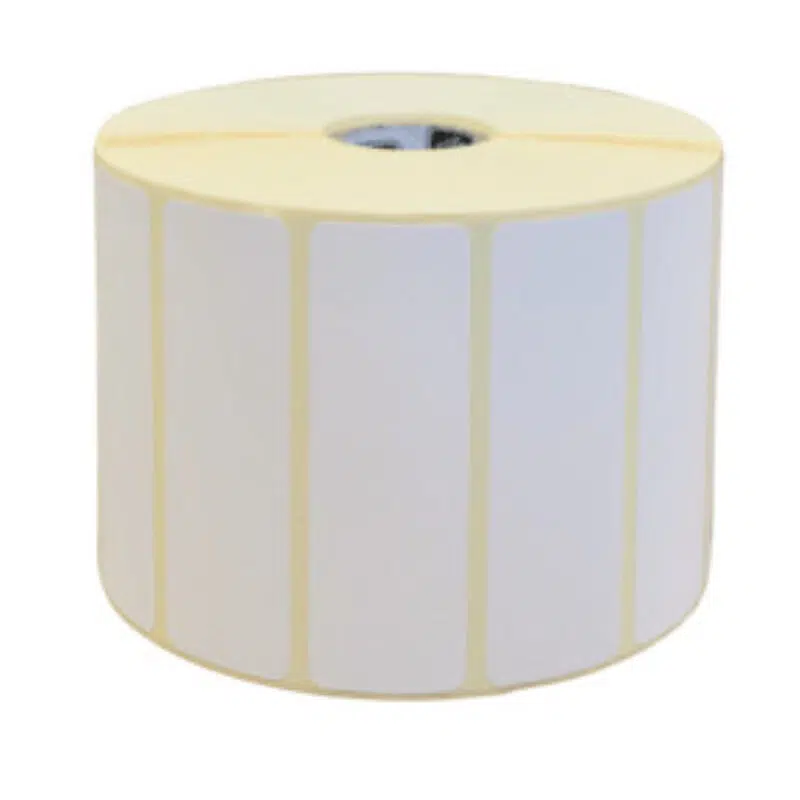
TSC Labels

TSC labels are the consumable side of the printing equation, and choosing the wrong type costs more than just money. A label that fades in a cold store, peels off a warehouse shelf, or fails a barcode scan at the point of despatch creates real operational problems. This guide covers every major TSC label category, explains the practical differences between them, and helps you match the right label to your printer and application before you order.

Delfi Technologies has supplied barcode and labelling solutions since 1988, and TSC Auto ID products have been part of that range for years. Whether you run a retail operation, a logistics hub, a production line, or a healthcare facility, the sections below give you the information you need to buy with confidence.

What TSC labels are and why the label type matters

TSC Auto ID, founded in 1991 and now operating in more than 100 countries, manufactures both printers and the label supplies designed to run in them. Using genuine TSC labels in a TSC printer is not just a brand preference. It directly affects printhead life, print quality, and compliance. Third-party compatible labels may save a small amount per roll, but inconsistent coating thickness and adhesive chemistry can accelerate printhead wear and produce barcodes that fail verification scans.

The label type you choose determines how the image is formed, how long it lasts, and what environments it can survive. There are four main categories in the TSC range: direct thermal, thermal transfer, linerless, and inkjet. Each works through a different mechanism, and each suits a different set of applications. Getting this decision right before you buy saves time, reduces waste, and protects your equipment.

The sections below break down each category in detail, then cover the buying criteria that apply across all of them.

Filter

At Delfi Technologies, you will find a wide selection of tsc tsc labels for professional needs. Make your business more efficient with tsc labels

Direct thermal labels: fast, simple, and cost-effective for short-term use

Direct thermal (DT) labels use a heat-sensitive coating on the face stock. The printhead activates the coating directly, so no ribbon is required. That makes DT labels cheaper per roll and faster to load, since there is no ribbon to thread or replace. The TSC DA210 and TSC DA220 are desktop direct thermal printers well suited to this label type.

The trade-off is durability. Direct thermal images darken when exposed to heat, UV light, or certain chemicals, and the face stock itself is more sensitive to abrasion than a thermal transfer print. For applications where labels are used within days or weeks, such as shipping labels, receipts, or short-shelf-life food packaging, this is rarely a problem. For labels that need to survive months of storage or outdoor exposure, direct thermal is the wrong choice.

Topcoated vs. non-topcoated direct thermal labels

Non-topcoated direct thermal labels are the most economical option. They work well for short-duration applications with minimal environmental exposure: picking slips, internal routing labels, and temporary shelf tags. If the label will be handled briefly and discarded, non-topcoated is usually sufficient.

Topcoated labels add a protective layer over the heat-sensitive coating. This improves resistance to abrasion, sunlight, moisture, and light chemical contact. If your labels travel through a distribution centre, get handled repeatedly at a retail point, or need to stay legible in a chilled or damp environment, topcoated direct thermal is the better specification. The cost difference per roll is modest, and the improvement in scan reliability is significant.

For receipt printing rather than adhesive labels, TSC also supplies thermal paper rolls. The TSC 79mm x 45m receipt rolls (box of 40, 12mm core) are a practical example of non-adhesive direct thermal media for POS applications.

Thermal transfer labels: the right choice when durability counts

Thermal transfer (TT) printing uses a ribbon, either wax, wax-resin, or full resin, pressed between the printhead and the label face stock. The heat melts the ribbon coating onto the label surface, producing an image that is chemically bonded to the material. The result is a print that resists smudging, scratching, moisture, and many chemicals far better than direct thermal output.

The TSC TE200, TSC TE210, and TSC TE300 are desktop thermal transfer printers that support both DT and TT media. The TSC TC310 adds wireless connectivity for more flexible deployment.

Choosing the right ribbon type

Wax ribbons are the standard choice for paper label stocks. They produce good print quality at a lower cost and suit most general-purpose logistics and retail applications. Wax-resin ribbons offer better scratch and smear resistance and work on both paper and some synthetic stocks. Full resin ribbons are reserved for polyester or polyimide labels in demanding environments: chemical plants, outdoor asset tags, or products that go through autoclave sterilisation.

Pairing the wrong ribbon with a label face stock is a common cause of poor print adhesion. A resin ribbon on an uncoated paper label, for example, will not transfer cleanly. TSC genuine supplies are tested as matched pairs, which removes this guesswork.

Thermal transfer for logistics and industrial use

Logistics labels need to survive the journey from despatch to delivery, sometimes across multiple handling points, temperature changes, and weather exposure. TSC supplies both standard paper thermal transfer labels and laminated foil logistics labels for applications requiring higher mechanical strength. Industrial labels add further requirements: chemical and solvent resistance, strong permanent adhesive, temperature resistance at both extremes, and abrasion resistance sufficient to survive conveyor belts and rough handling. If your operation involves any of these conditions, thermal transfer on a synthetic face stock with a resin ribbon is the specification to specify.

Linerless labels: more labels per roll and less waste

Linerless labels eliminate the silicone-coated backing paper (the liner or glassine) that standard labels sit on. The roll contains only the label material itself, with a release coating on the back face. This single change has a measurable impact on both economics and sustainability.

According to TSC EMEA data, linerless labels deliver 50 to 60 percent more labels per roll compared to equivalent lined media, reduce greenhouse gas emissions by 30 percent, cut shipping weight by 40 percent, and save 40 percent of the water used in production. For high-volume operations, those figures translate directly into lower consumable costs and fewer roll changes per shift.

Delfi Technologies stocks TSC linerless labels in specific roll formats. One example is the 78mm wide roll with a 25.4mm core and 123mm outer diameter. The 100mm wide format comes in 32-metre rolls, packed 18 rolls per case. These dimensions matter when you are specifying media for a particular printer, so always confirm the roll specifications against your printer’s media compartment before ordering.

TSC specifies linerless roll dimensions by printer class. Desktop printers accept rolls up to 4 inches (approximately 102mm) wide, with a 1-inch core and up to 5-inch outer diameter. Mobile printers use narrower rolls: 1 inch to 4.4 inches wide, 0.75-inch core, and up to 2.625-inch outer diameter. Custom formats are available from 37mm minimum width. The TSC Alpha-40L is a mobile linerless printer supporting 50.8mm to 112mm media width, and the Alpha-40L with peeler adds a built-in label dispenser for hands-free application. For the MB240 and MB241 series, Delfi also stocks the linerless cutter upgrade kit and the linerless tear-off upgrade kit to retrofit existing printers for linerless operation.

Linerless printing requires a printer specifically designed or upgraded for the format. Standard label printers cannot run linerless media without modification, because the release coating on the label back face will stick to standard platens and guides.

TSC inkjet labels: colour printing for product identification and compliance

TSC’s inkjet label range, used with the TSC CPX4 colour inkjet printer, covers four material grades identified by series code. Each uses a permanent acrylic adhesive and is optimised for a specific print and application environment.

Series

Material

Surface

Primary use case

IJP100

60lb matte white paper

Matte

General product labelling, indoor use

IJP300

60lb high-gloss white paper

High gloss

Retail product labels, colour-critical applications

IJP500

3.5mil gloss white BOPP film

Gloss film

Labels requiring moisture or light chemical resistance

IJP600

5mil BS5609 Section 3 drum label

Film

Chemical drum labelling, GHS/CLP compliance


The IJP600 is the specification for chemical drum labels. It meets the BS5609 Section 3 standard when printed with genuine TSC pigment inks, which is a requirement for GHS-compliant hazardous substance labelling. Using third-party inks with this material invalidates the compliance claim, because the standard tests the ink and substrate as a combined system. If your operation labels chemical drums or hazardous goods, the IJP600 with genuine TSC pigment ink is the only combination that meets the standard.

For colour product labels that do not require compliance certification, the IJP100 and IJP300 cover most indoor retail and food-service applications. The IJP500 BOPP film adds durability for products that will be refrigerated, handled in damp environments, or need a premium finish.

How to choose the right TSC label for your application

The decision tree is straightforward once you know the variables. Work through these four questions in order.

1. How long does the label need to last? Short-term (days to weeks): direct thermal is sufficient. Medium to long-term (months to years): thermal transfer or inkjet film.

2. What environment will the label face? Indoor, dry, minimal handling: non-topcoated direct thermal. Outdoor, damp, UV exposure, or chemical contact: topcoated direct thermal at minimum, thermal transfer on synthetic stock for demanding conditions, or BOPP/drum label film for the harshest environments.

3. Do you need colour? Monochrome is sufficient for most logistics, warehouse, and compliance labels. Colour adds value for retail product labels, brand identification, and GHS pictograms. TSC inkjet labels cover colour requirements.

4. What volume do you print per shift? High-volume operations benefit from linerless media (fewer roll changes, lower cost per label) and industrial-class printers. Lower-volume desktop applications are well served by the DA, TE, or TC series printers with standard lined media.

Once you have answered these questions, the label category is usually clear. The next step is confirming roll dimensions against your printer’s media specification.

Printer compatibility: matching labels to TSC printer models

TSC labels are designed to run in TSC printers, and the printer model determines which media formats are physically compatible. The table below maps common printer series to their label type support.

Printer series

Print technology

Linerless support

Typical application

DA210 / DA220

Direct thermal only

No

Desktop shipping and retail labels

TE200 / TE210 / TE300

DT and thermal transfer

No

Desktop general-purpose labelling

TC310

DT and thermal transfer

No

Desktop with wireless connectivity

Alpha-30R / Alpha-40L

Direct thermal (mobile)

Alpha-40L yes

Mobile retail and logistics labelling

MB240 / MB241

Direct thermal (mobile)

With upgrade kit

Mobile industrial and field labelling

MH240 / MH261T

DT and thermal transfer

No

Industrial high-volume labelling


For the MB240 and MB241 series, the linerless upgrade is available as a separate kit. Delfi stocks both the cutter version and the tear-off version. The MH240 series uses a heavy-duty cutter module, and the MH261T has its own heavy-duty rotary cutter. The DA220 and DA320 use a guillotine cutter, while the TDP-225 series takes a dedicated guillotine cutter module. Matching the cutter to the printer matters as much as matching the label media.

If you are unsure which label format your printer accepts, the product page for your printer model on the Delfi webshop lists the supported media width, core diameter, and outer diameter. You can also browse the full TSC product range on Delfi to see labels and printers together, or go directly to the TSC labels and etiketter category for the current stock list.

Industry use cases for TSC labels in Denmark

Different sectors have different label requirements, and understanding the typical specification for your industry saves time during procurement.

Retail and e-commerce

Retail applications typically need price labels, shelf-edge tags, and despatch labels. Direct thermal on topcoated paper covers most of these. High-volume fulfilment operations benefit from linerless media to reduce roll changes and liner waste. The TSC Alpha-30R mobile printer suits floor-level price marking and inventory tasks where a fixed desktop printer is impractical.

Logistics and warehousing

Picking, packing, shipping, and stock control labels need to survive handling, conveyor systems, and sometimes outdoor exposure during last-mile delivery. Topcoated direct thermal covers standard shipping labels. Laminated foil thermal transfer labels add mechanical strength for pallets or items that travel through multiple handling points. Barcode readability at every scan point is non-negotiable, and genuine TSC labels produce consistent print density that supports reliable scanning.

Healthcare

Healthcare labelling requirements include patient wristbands, sample tubes, medication packaging, and asset tags. Labels in this environment face autoclave sterilisation, chemical disinfectants, and strict traceability requirements. Thermal transfer on synthetic stock with a resin ribbon is the standard specification. The TSC TH Series desktop printer is designed specifically for healthcare applications and includes RFID functionality for asset tracking.

Manufacturing and industrial

Industrial labels must resist chemicals, solvents, temperature extremes, and abrasion. A label on a component moving through a production line may face cutting fluids, heat treatment, and rough handling before it reaches the end of the line. Synthetic face stocks with strong permanent adhesives and resin ribbon printing are the minimum specification. For chemical drum labelling, the TSC IJP600 inkjet label with genuine pigment ink meets BS5609 Section 3 and supports GHS compliance.

Frequently asked questions about TSC labels

Physically, yes. Practically, the risks include accelerated printhead wear from inconsistent coating thickness, adhesive residue on the platen from labels with poorly matched adhesive chemistry, and barcodes that fail verification because the print density is inconsistent. Genuine TSC labels are tested to work with TSC printheads and platens. For compliance-critical applications such as GHS drum labels, only genuine TSC media with genuine TSC inks meets the BS5609 standard.

Core diameter determines which roll fits in a given printer’s media compartment. Desktop printers typically use 1-inch (25.4mm) cores. Industrial printers often accept both 1-inch and 3-inch (76mm) cores, with the larger core allowing a bigger roll and fewer changeovers. Always check the core diameter specification for your printer before ordering. The TSC label listings on the Delfi webshop include core diameter (C:) in the product title for easy reference.

Linerless printing requires a platen and guides designed for the release-coated back face of linerless labels. Standard printers are not compatible without modification. Check the printer’s product page or contact Delfi Technologies directly. For the MB240 and MB241 series, the linerless upgrade kit converts the printer for linerless operation. The Alpha-40L is linerless-native from the factory.

TSC desktop linerless printers accept rolls up to 4 inches (approximately 102mm) wide, with a 1-inch (25.4mm) core and up to 5-inch (127mm) outer diameter. The 78mm wide format with a 25.4mm core and 123mm outer diameter is one of the standard sizes stocked by Delfi. The 100mm wide format in 32-metre rolls (18 per case) is another. If you need a custom width, TSC offers formats from 37mm minimum width.

Delfi Technologies ships TSC labels and supplies from its webshop at shop.delfi.com. For current stock availability and delivery times, check the TSC product pages directly or contact the Delfi team at [email protected].

Buying TSC labels from Delfi Technologies

TSC labels are a precision consumable. The right choice depends on your printer model, your application environment, your volume, and in some cases your regulatory obligations. Delfi Technologies has supplied barcode solutions since 1988 and stocks genuine TSC labels across all major categories, from standard direct thermal paper rolls to linerless formats and inkjet drum label media.

Browse the full range of TSC labels on the Delfi TSC labels category page, or explore the complete TSC brand range including printers, upgrade kits, and accessories. If you are also evaluating label printers, the TSC label printer category lists current models with full specifications. For specific printer models, the TSC TE210 with Wi-Fi and the TSC TE210 wired version are popular desktop choices that support both direct thermal and thermal transfer media. Getting the label and the printer specified together from a single supplier simplifies compatibility and keeps your supply chain straightforward.