Business label printers: The complete guide to making the right choice
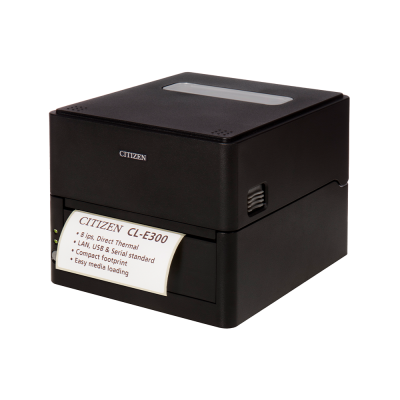
Streamline your workday with a label printer that matches your business needs
Label printers are a key component in the daily operation of many businesses, even those operating on a smaller scale. They are used to create overview, structure, and traceability in both physical and digital processes.
In retail environments, they make it easy to update price tags and organize shelf placements without manual effort. In the warehouse, they help to label locations, goods, and picking routes, thus avoiding misdeliveries and wasted time.
For office-based functions, they are indispensable for filing, inventory management and printing name badges or internal notes.
For shipments, they ensure correct address labels and clear barcode marking, which makes it easier to handle packages efficiently. Label printers are therefore not only practical, but crucial for keeping the system behind the company’s outer facade well-functioning.
The technology behind it: How a label printer works
There are generally two ways a label printer works: direct thermal printing and thermal transfer. Common to both is that they do not require ordinary ink, but use heat to produce the print – the difference lies in the method and the material.
Direct thermal printing activates a heat-sensitive material that changes color when heated. This makes the technology ideal for temporary markings such as shipping labels and shelf signs, where long life is not necessary.
Thermal transfer, on the other hand, uses a ribbon that melts dye onto the label. This provides more durable results that can withstand both light and wear – an advantage in warehouse or production environments where the labels must last over time.
The choice between the two technologies depends not only on quality, but also on the label’s purpose and environment. It is therefore important to assess how and where the labels will be used before deciding on a solution.
How to match your printer to your business needs
Companies have different needs, depending on what, where, and how often labels need to be printed. For some, it is about flexibility and quick access to labeling in changing work environments. For others, it is capacity and reliability over long periods that are most important.
Small businesses with low volume can often make do with a compact solution that can easily be placed on a desk and operated without prior training. If the company works with shipping, warehousing, or production, the requirements for both print quality and robustness increase. A high printing need also requires a model that can handle continuous operation without downtime.
Mobile work, e.g. when labeling directly in store aisles or in the warehouse, requires flexible solutions with wireless connection. In addition, the availability of consumables such as label rolls or ribbons can influence the choice, especially if the printer is to be used daily.
The choice of label printer should therefore be based on the company’s workflows, not just the printing function itself.
Integration and operations: Labeling as part of your workflows
When label printers are integrated with the company’s other systems, labeling becomes an automated and reliable part of operations. This reduces the risk of manual errors and ensures that data is transferred directly from the IT system to the label – without detours.
In many cases, it is possible to connect label printers with order management, warehouse management, or POS solutions, so that information such as product names, prices, or barcodes is transferred automatically. This saves time and reduces the need for double entry, which is an advantage when resources are scarce.
At the same time, operations become more transparent when labels are used consistently and strategically. This applies both in daily work and in follow-up, where correct labeling makes it easier to track goods, identify locations, and ensure overview in both physical and digital contexts.
In this way, labels become not just part of a practical process, but a tool that supports structure, security and continuity in business workflows.