TSC Label Printers

Filter

Direct thermal vs thermal transfer: which technology fits your labels?

This is the single most important technical decision in the buying process, and it is frequently skipped over. Direct thermal (DT) printing uses heat-sensitive paper and requires no ribbon. The labels are cheaper per unit and the printer mechanism is simpler, but the output degrades when exposed to heat, UV light, or abrasion. Direct thermal is well-suited to shipping labels, receipts, short-life retail tags, and any application where labels are used and discarded within days or weeks.

Thermal transfer (TT) printing uses a ribbon to transfer ink onto the label substrate. The result is a durable, smear-resistant print that can survive outdoor exposure, chemical contact, and years of storage. Thermal transfer is the right choice for asset tags, compliance labels, product identification in manufacturing, and any label that needs to remain legible for months or years.

Several TSC models support both technologies on the same unit. The TSC TE210 and the TSC TC310 both handle direct thermal and thermal transfer printing, giving you flexibility as your label requirements change. If you are only printing short-life labels today but expect to add durable asset tags later, a dual-mode printer avoids a second hardware purchase.

Linerless printing is a third option worth knowing about. Linerless labels have no backing paper, which cuts material costs and eliminates liner waste. The MB241 Series supports linerless printing, and Delfi stocks the TSC Linerless Tear-off Upgrade Kit for MB240/MB241 and the TSC Linerless Cutter Upgrade Kit for MB240/MB241 for businesses that want to add this capability to an existing unit.

TSC desktop label printers: the right fit for retail and office environments

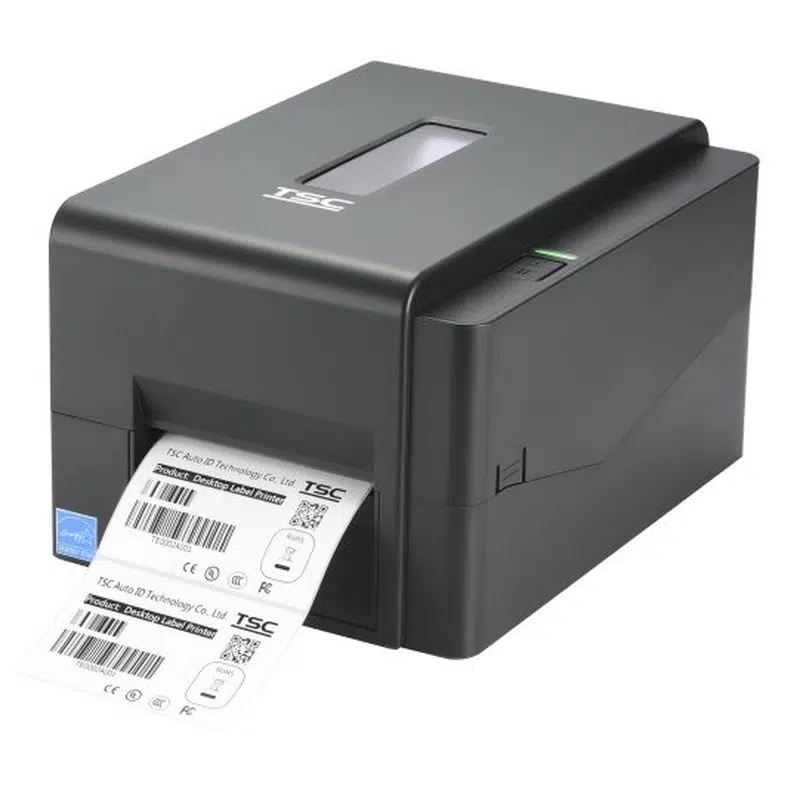
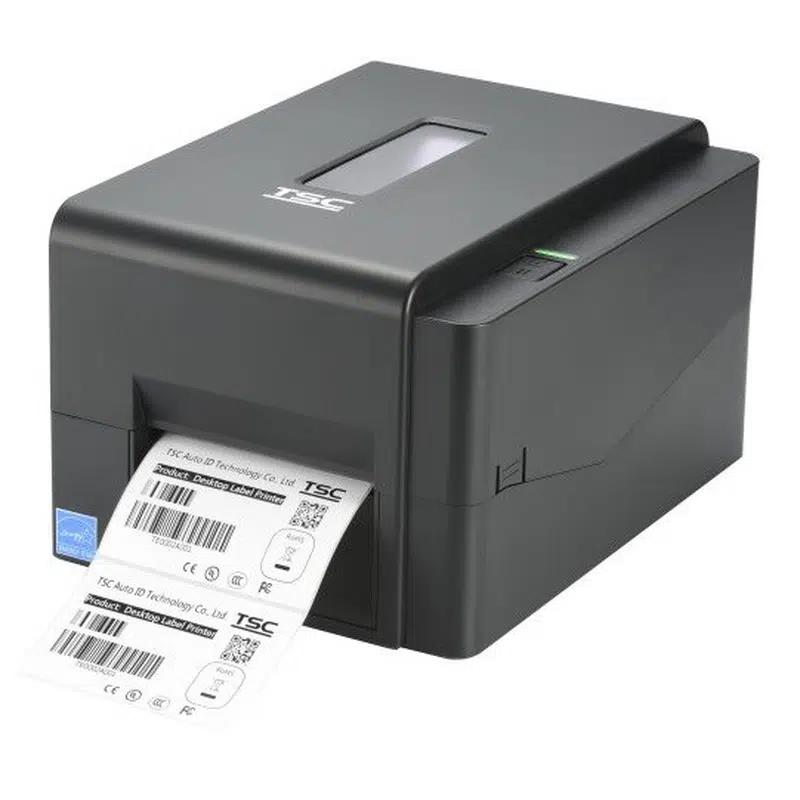
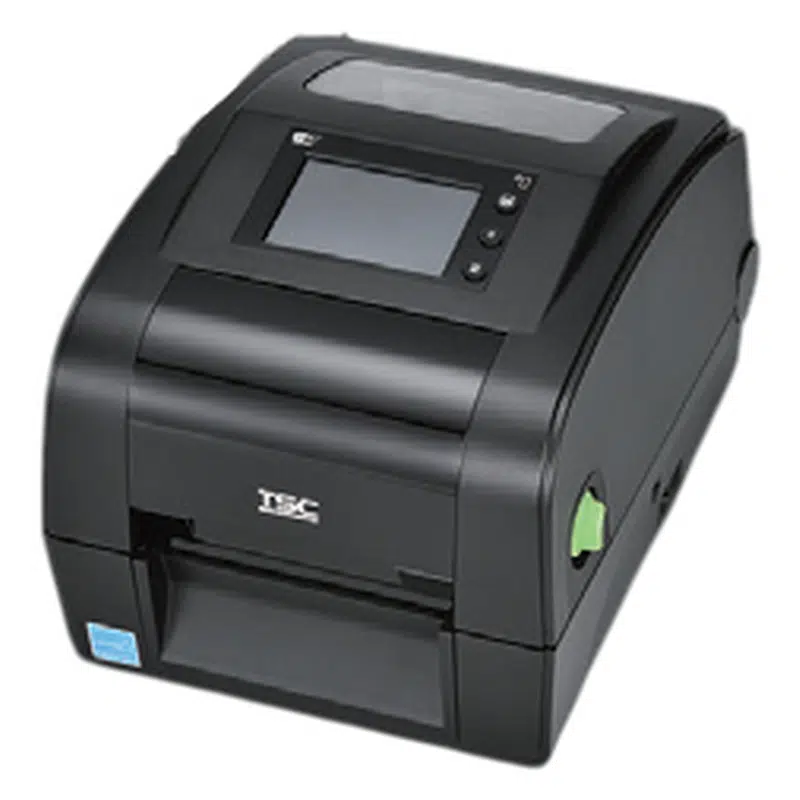
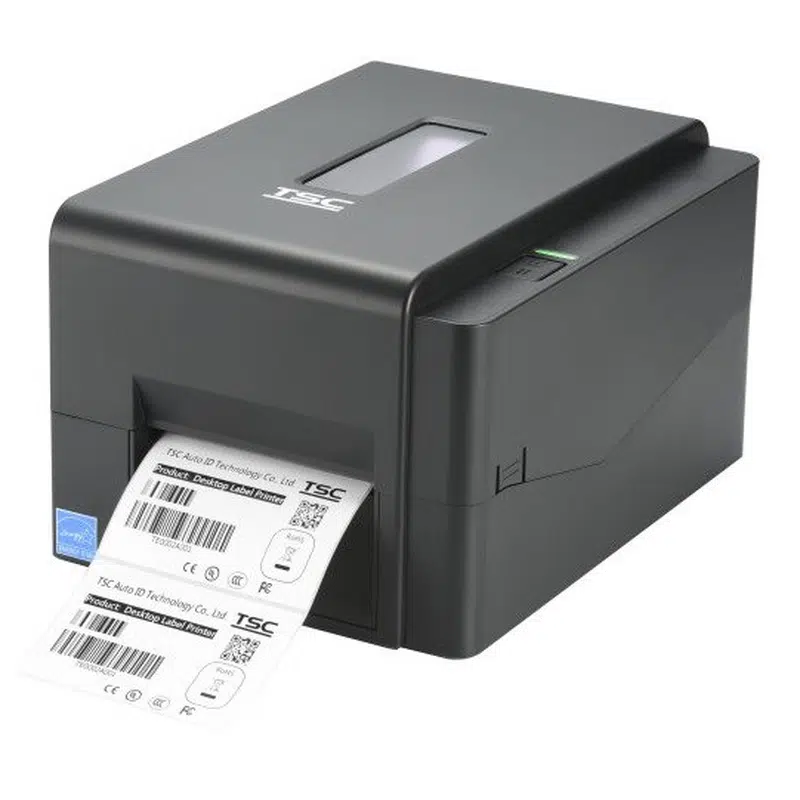
Desktop TSC label printers are compact, quiet, and designed for intermittent to moderate print volumes. The TDP Series is a strong starting point for businesses that primarily print 2-inch labels with 2D barcodes, fine text, or small graphics. The four TDP models differ mainly in resolution and connectivity, so matching the model to your label complexity is straightforward.

The TSC DA210 and TSC DA220 are direct thermal desktop printers that support multiple printer languages including EPL, ZPL, ZPLII, and TSPL-EZ. This multi-language support matters if you are migrating from a Zebra printer or integrating with an existing WMS or ERP system, because you can often reuse existing label templates without reprogramming.

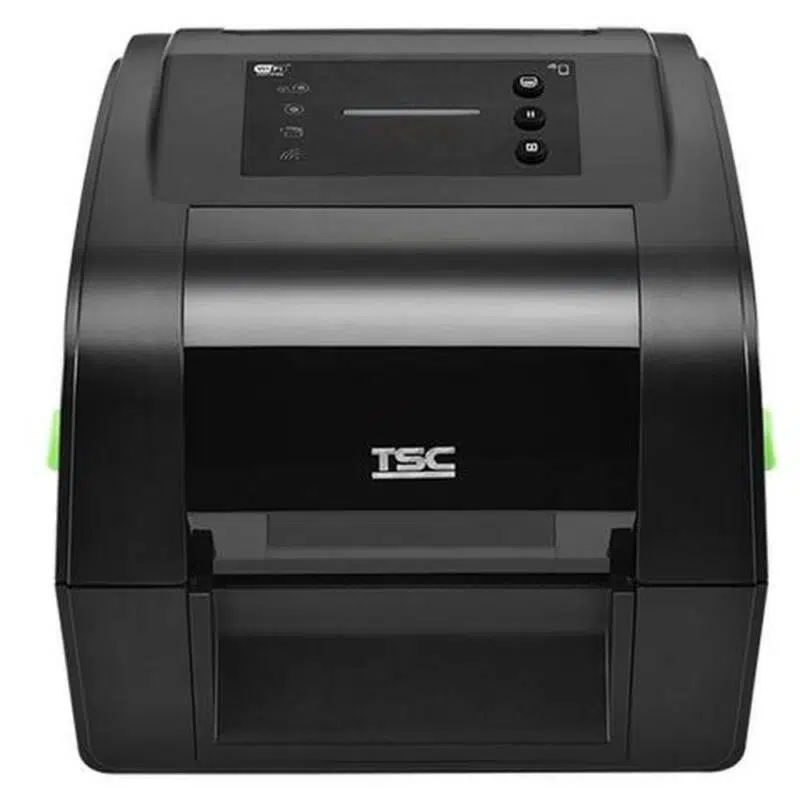
The TSC TE200 is the entry-level wired desktop option for businesses that need USB connectivity and basic label printing without the cost of wireless features. For operations that need both wired and wireless flexibility, the TSC TE210 with Wi-Fi adds Ethernet and wireless connectivity while keeping the same compact footprint.

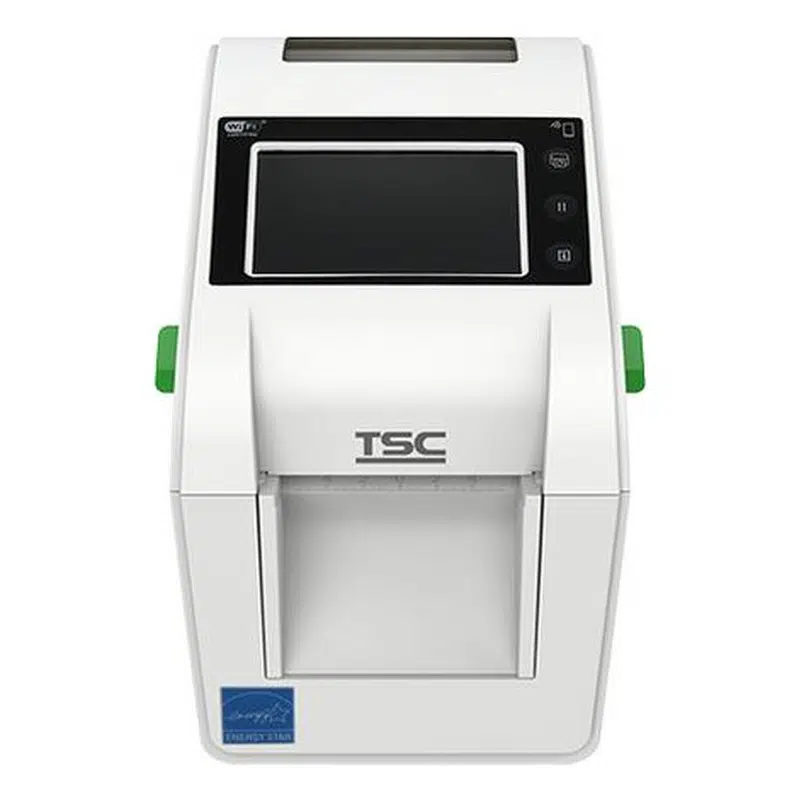
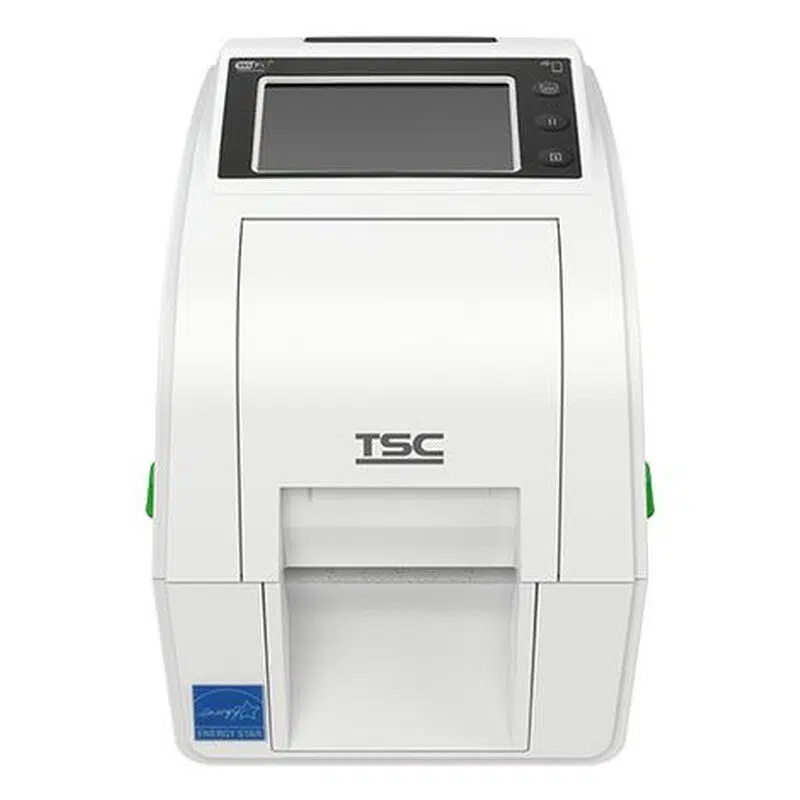
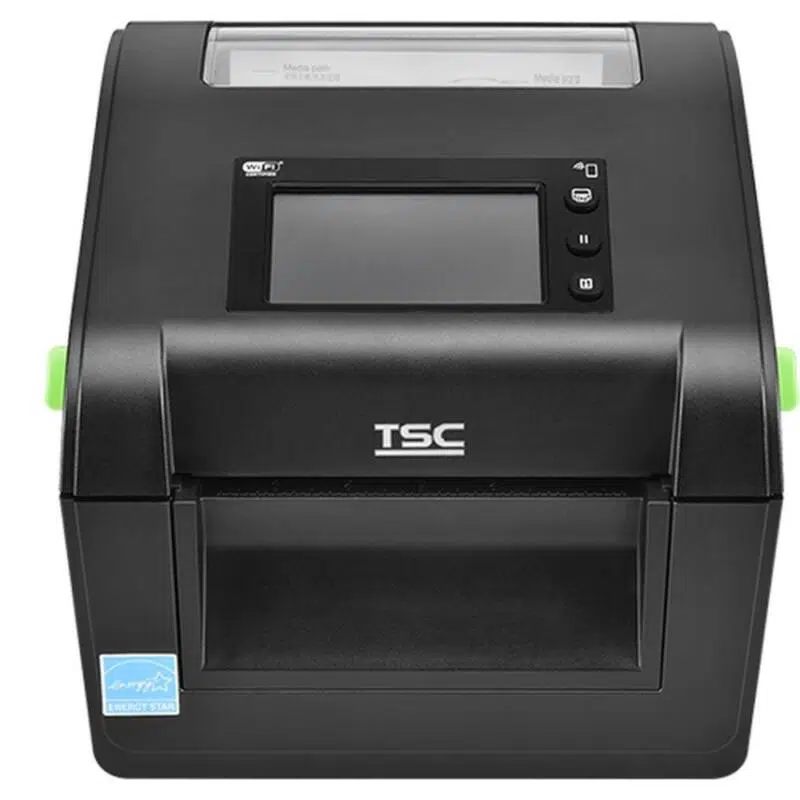
The TH Series desktop printers add RFID encoding capability, which is increasingly relevant in healthcare and retail environments where asset tracking and inventory accuracy are priorities. If your operation already uses RFID tags or is planning to, selecting an RFID-ready desktop printer from the start avoids a hardware upgrade later. The TH DH Series also uses recycled components in both the product design and packaging, which aligns with sustainability procurement requirements that are common in Scandinavian organisations.

For higher print resolution on desktop, the TSC TE300 and the TSC TC310 both print at 300 DPI (12 dots/mm), which is the right choice for small labels with dense information, pharmaceutical labels, or any application where print clarity at small sizes is non-negotiable.

TSC industrial label printers: built for continuous operation

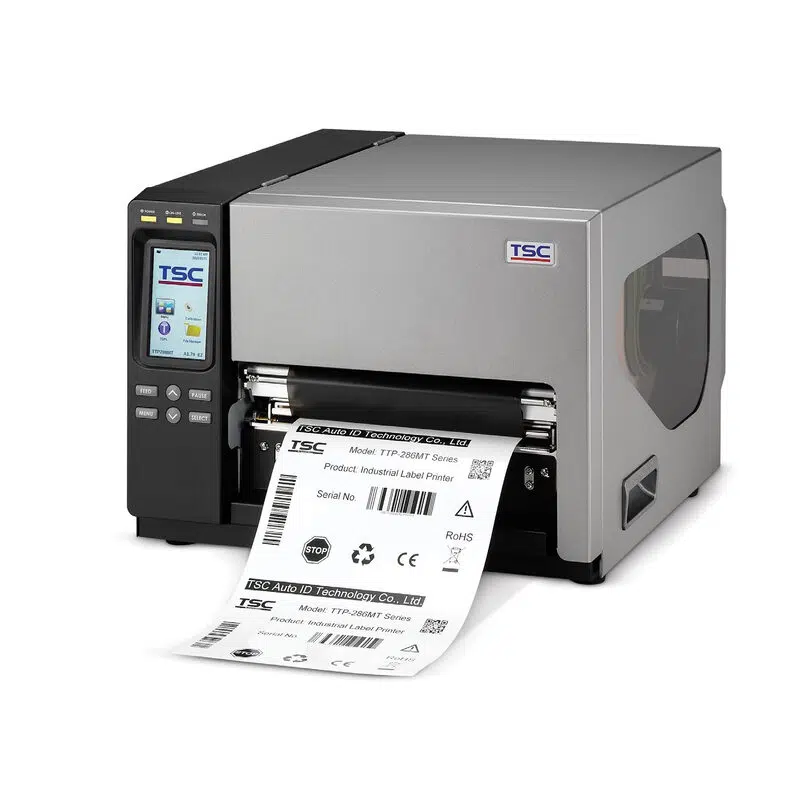
Industrial TSC label printers are designed to run continuously in demanding environments. The MB Series is the most notable recent addition, with the MB241 Series earning the Red Dot Award: Product Design 2025 for its forward-thinking sustainable design. The bifold media door on the MB Series reduces the required operating space by 24% compared to standard industrial printer designs, which matters in tight warehouse or production floor layouts. The MB Series also ships in 100% recyclable packaging with more than 90% recyclable components in the printer casing itself.

The MB Series supports MFi Bluetooth 5.0 and Wi-Fi connectivity, plus optional accessories including linerless kits, peel-off kits, internal rewinder kits, and cutters. Delfi stocks the TSC Upgrade Kit Cutter for MB240 series and the TSC Cutter Module for TDP-225/TDP-225W separately, so you can configure the printer to your exact finishing requirements.

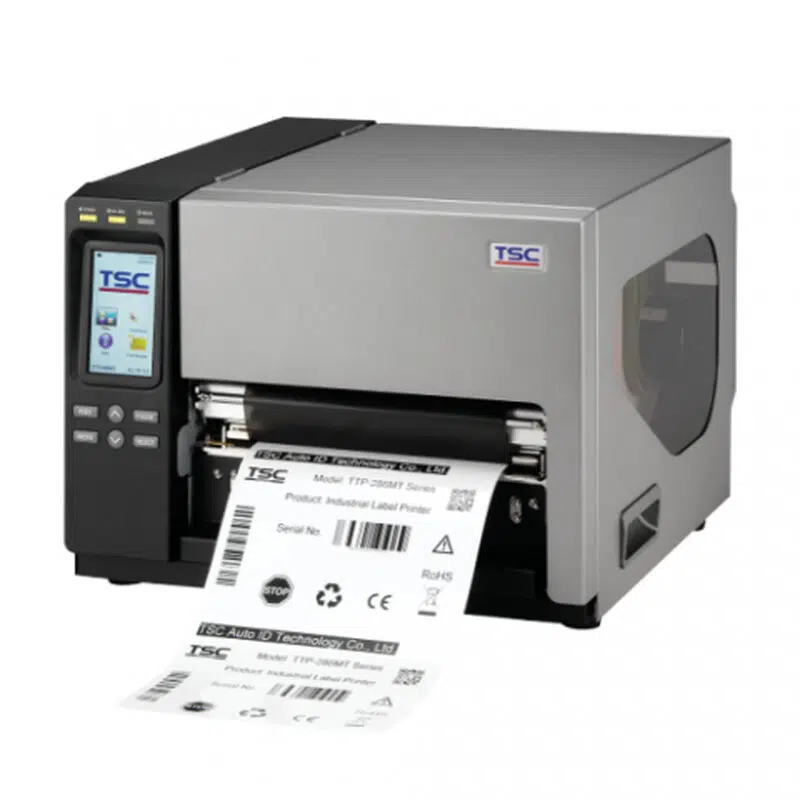
The MH Series is TSC’s flagship industrial printer. Available in 4-inch and 6-inch print widths, it uses premium printhead technology and is built for operations that cannot afford downtime. The MX Series prioritises speed above all else and is the right choice when throughput is the primary constraint, for example in parcel sorting, e-commerce fulfilment, or high-volume manufacturing lines.

For print and apply systems, the PEX-2000 print engine is the relevant product. It has a mean time between failures (MTBF) of up to 22,000 hours, runs in a full-metal chassis, and supports print speeds up to 18 inches per second. It connects via DB15 and DB25 connectors and supports GPIO emulations from major printer brands, which simplifies integration with existing automated labelling systems.

The Printronix Auto ID line, which operates under the TSC Auto ID group, adds enterprise-grade barcode verification through ODV-2D technology. The T8000 and T6000e printers verify and grade both 1D and 2D barcodes in a single pass, which is a compliance requirement in pharmaceutical supply chains and some retail vendor programmes. If barcode quality verification is a contractual obligation in your supply chain, these are the models to evaluate.

TSC mobile label printers: printing without a fixed workstation

The Alpha Series covers mobile printing for workers who cannot return to a fixed printer. The TSC Alpha-30R Premium is a compact mobile printer with 203 DPI resolution, Wi-Fi, Bluetooth, NFC, and an IP54 rating for dust and splash resistance. It runs on DRAM 128MB and flash 128MB, and supports both USB and real-time clock (RTC) functions.

The TSC Alpha-40L adds a peeler, USB-C charging, and an extended battery option, making it a practical choice for retail floor staff or delivery operations where charging time is a constraint. A linerless variant of the Alpha-40L is also available: the TSC Alpha-40L Linerless supports ESC/POS and TSPL-EZ printer languages and includes an autocutter, which removes the need for pre-cut label rolls in mobile workflows.

Mobile printers in the Alpha Series connect to iOS and Android devices via Bluetooth and NFC, and TSC’s TSCPRTGo app provides mobile printing support through a connected smart device. For businesses managing a fleet of mobile printers across multiple sites, TSC Console and TSC CloudConnect provide remote fleet management and cloud-ready printing management respectively.

Key buying criteria for TSC label printers

Before selecting a model, work through these five questions. They will narrow the field quickly and prevent a mismatch between the printer and the workload.

Print volume and duty cycle

Desktop printers are rated for light to moderate daily volumes. Industrial printers are built for continuous operation. If your operation prints more than a few thousand labels per shift, start with the MB or MH Series rather than a desktop unit. Overloading a desktop printer shortens printhead life and increases total cost of ownership.

Label size and media type

TSC printers cover label widths from 2 inches to 6 inches. Check the maximum print width of any model against your widest label. Also confirm whether you need to print on paper, synthetic, or linerless media, as not all models support all substrates. The DA Series and DH Series support a range of direct thermal media types including linerless.

Connectivity requirements

Most TSC desktop printers include USB as standard. Ethernet and Wi-Fi are available on mid-range and above models. If your label printing is integrated with a WMS, ERP, or POS system, confirm that the printer supports the required interface and printer language (TSPL-EZ, ZPL, EPL, or DPL). Multi-language models like the TSC DA220 reduce integration risk significantly.

RFID requirements

If you encode RFID tags as part of your labelling process, confirm RFID support before purchasing. The TH Series and MB Series both include RFID capability. The Printronix T8000 and T6000e add barcode verification on top of RFID, which is relevant for regulated industries.

Accessories and finishing options

Cutters, peelers, rewinders, and linerless kits are available for most TSC industrial and desktop models. Delfi stocks a range of TSC accessories including the TSC Cutter for DA220/DA320 and the TSC Heavy Duty Cutter for MH240 series. Specifying accessories at the time of purchase avoids compatibility issues later.

TSC label printer software ecosystem

Hardware is only part of the picture. TSC provides a set of software tools that extend the value of the printer fleet. TSC Console is the remote fleet management application for monitoring and configuring multiple printers from a central point. TSC CloudConnect extends this to cloud-based management, which is useful for organisations with printers across multiple sites or countries. TSC Console Web provides browser-based access for on-the-go management without a dedicated desktop application.

For developers integrating TSC printers into custom applications, the UniPRT SDK is a unified software development kit that supports both TSC Auto ID and Printronix Auto ID printers. TSC Standalone Creator generates a customised printer LCD interface for quick template access, reducing operator error in high-turnover environments. TSCPRTGo handles mobile printing via a connected smart device for the Alpha Series mobile printers.

Third-party tools including SOTI Connect are also compatible with TSC printers, which matters for organisations that already use SOTI for mobile device management across their wider device fleet. Delfi Technologies has provided barcode and data capture solutions since 1988 and can advise on software integration alongside hardware selection.

TSC label printers compared: a quick reference by use case

Use case

Recommended series

Key feature

Office or retail stockroom

TDP, TE, DA Series

Compact, USB/Ethernet, multi-language support

Healthcare (wristbands, asset tags)

TH Series, DH Series

RFID-ready, recycled components, wristband support

Warehouse and logistics

MB Series, MH Series

Industrial duty cycle, bifold door, RFID, accessories

High-speed manufacturing

MX Series, PEX-2000

Fastest speeds, 18 ips, 22,000-hour MTBF

Supply chain compliance

Printronix T8000, T6000e

ODV-2D barcode verification and grading

Mobile/field printing

Alpha-30R, Alpha-40L

IP54, Bluetooth, NFC, linerless option

Print and apply systems

PEX-2000

GPIO support, full-metal chassis, 18 ips

Frequently asked questions about TSC label printers

Most TSC printers support TSPL-EZ as the native language. Mid-range and higher models also support ZPL, ZPL II, EPL, and DPL, which makes migration from Zebra or Datamax printers straightforward. Check the specific model page to confirm language support before purchasing.

Yes. TSC printers with Ethernet or Wi-Fi connectivity can be addressed directly by most ERP and WMS platforms that support network printing. The UniPRT SDK provides a development interface for custom integrations. Multi-language support (ZPL, EPL, DPL) also means existing label templates from other printer brands often work without modification.

The TSC Performance Line (MB, MH, MX Series) covers the majority of industrial label printing requirements, including RFID encoding and high-speed output. The Printronix Auto ID Enterprise Line (T8000, T6000e) adds ODV-2D barcode inspection and grading in a single pass, which is a specific requirement in pharmaceutical, aerospace, and retail vendor compliance programmes. If barcode quality verification is not a contractual requirement, the TSC Performance Line is the more cost-effective choice.

Several TSC models support linerless printing, including the DH Series, the MB241 Series, and the Alpha-40L Linerless mobile printer. Linerless labels reduce material costs and eliminate backing paper waste. For existing MB240 or MB241 owners, Delfi stocks both the linerless tear-off upgrade kit and the linerless cutter upgrade kit as add-on accessories.

Yes. Delfi Technologies has specialised in barcode technology and data capture since 1988 and is based in Køge, Denmark. The team can advise on model selection, software integration, and accessories. You can browse the full TSC range at Delfi or visit the label printer category page to compare models side by side.

Choosing the right TSC label printer for your business

TSC label printers cover every commercial printing requirement from a single-user retail counter to a 24/7 automated production line. The barcode label printer market is projected to reach USD 11.62 billion by 2034 (The Insight Partners), which reflects how central label printing has become to supply chain, retail, and healthcare operations. TSC’s position as a global manufacturer with ISO-certified production facilities and a portfolio that spans desktop, mobile, industrial, and print-and-apply systems means you are unlikely to outgrow the brand as your operation scales.

Start by identifying your print volume, label size, media type, and connectivity requirements. Then use the comparison table above to narrow down the series. If RFID encoding or barcode verification is a requirement, that narrows the field further to the TH Series, MB Series, or Printronix Auto ID line. Browse the full selection of TSC label printers at Delfi Technologies, or contact the team directly for a recommendation based on your specific workflow. Delfi also stocks Bluetooth label printers and TSC Zebra-compatible label printers if your requirements span multiple connectivity types or brands.