


Common mistakes when choosing labels – and how to avoid them
At Delfi Technologies, we have specialised in delivering innovative barcode technologies and data capture solutions since 1988, including a wide range of label printers and labels for every purpose. We know how important it is to choose the right label for your specific task—whether for warehouse management, retail, logistics, or the healthcare sector. The wrong choice can have major consequences for efficiency and, ultimately, your bottom line. That is why we have compiled the most common mistakes when choosing labels—and how to avoid them.
We guide you through the pitfalls many companies fall into and provide the knowledge you need to ensure your labels perform optimally under all conditions. We combine software and hardware to create tailored solutions, and this naturally also applies when it comes to choosing the right labels to support your processes as effectively as possible.
Why is choosing the right label so important?
Labels are more than just stickers; they are an integral part of your business process—from identification and tracking to marketing and warehouse management. They carry critical information and must be able to withstand the environments they are exposed to. Choosing the wrong label can lead to:
- Unreadable barcodes
- Labels that fall off
- Shortened lifespan of the product’s identification
- Wasted time and resources
- Errors in inventory or shipping
- Loss of customer trust
A correctly selected label ensures your processes run smoothly and that your data is always accurate and accessible. Let us take a closer look at the most common mistakes when choosing labels—and how to avoid them.
Ignoring the environment and application
One of the most common mistakes we see is underestimating the environment the label must operate in, as well as its specific application. A label that works perfectly on a dry package in a warehouse will likely fall off a product stored in a refrigerator or freezer, or one exposed to chemicals.
How to avoid it: Analyse the environment and requirements
Before choosing labels, ask yourself these questions:
- Temperature: Does the label need to withstand extreme cold or heat (e.g., in freezers or ovens)?
- Humidity: Will the label be exposed to moisture, water, or condensation?
- Chemicals: Is there a risk the label will come into contact with oils, solvents, or other chemicals?
- Wear: Does the label need to withstand friction, rubbing, or constant handling?
- Surface: What type of surface must the label adhere to (paper, plastic, metal, rough, smooth, curved)?
- Lifespan: How long must the label remain attached and legible?
- Regulations: Are there specific industry standards or legal requirements for the labelling (e.g., the food industry, the healthcare sector)?
By answering these questions, we at Delfi Technologies can help you choose a label with the right combination of material and adhesive to match your needs precisely. We offer solutions that work in everything from demanding industrial environments to sterile hospital settings.
Choosing the wrong label material
There is a vast range of label materials, and choosing the wrong one is a frequent cause of problems. Common mistakes when choosing labels—and how to avoid them—often come down to matching physical durability with environmental requirements. Paper labels are inexpensive and suitable for indoor shipping labels, but insufficient for products that must be used outdoors or in wet environments.
How to avoid it: Know your materials
We can advise you on choosing between, for example, direct thermal labels and thermal transfer labels, which we offer in a wide selection within our range of label printers and accessories. Direct thermal is more affordable, but fades over time and is sensitive to heat and light, while thermal transfer provides a more durable and resistant print quality—ideal for long-lasting labelling, for example in the warehouse or in production.
Underestimating the importance of the adhesive
A label is only as good as the adhesive that holds it in place. A common mistake is using a standard adhesive for all purposes. An adhesive that is not strong enough for a rough or greasy surface will result in the label falling off. Likewise, an adhesive that is too strong can damage the surface or make the label impossible to remove, if removal is required.
How to avoid it: Choose the right adhesive
Adhesives can be grouped as follows:
- Permanent adhesive: Ideal when the label must remain attached for the entire lifetime of the product.
- Removable adhesive: Perfect when the label must be removed without leaving residue or damaging the surface (e.g., price tags on clothing or glass).
- Freezer adhesive: Specially developed to adhere to surfaces in very cold environments, e.g., frozen goods.
- Wet-tack adhesive: An adhesive with high initial tack, suitable for uneven or damp surfaces.
At Delfi Technologies, we advise you on choosing an adhesive that ensures optimal adhesion under the specific conditions. This helps you avoid one of the most common mistakes when choosing labels—and how to avoid it is to specify requirements for the adhesive’s performance.
Failing to consider the print technology
The choice of label also affects the print technology you use. Printers can be thermal (direct thermal or thermal transfer), inkjet, or laser. Not all labels are compatible with all printer types, which can lead to poor print quality, reduced durability of the print, or even damage to the printer.
How to avoid it: Match the label to the printer
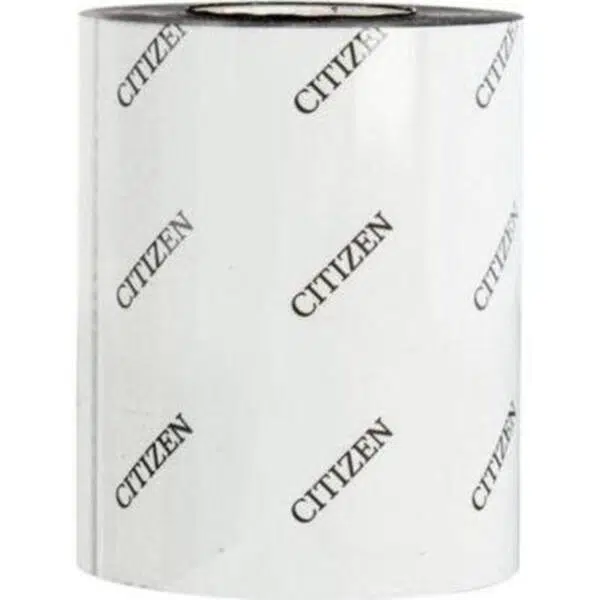
- Thermal transfer printers: Require specific ribbons and labels designed to receive heat transfer. They produce very durable, sharp prints—ideal for barcodes and data that must last. We offer a wide range of thermal transfer ribbons in various materials to match our label printers.
- Direct thermal printers: Use heat to activate chemicals in the label, which then darken. They require no ribbon, but prints are not as durable against light, heat, and wear. Suitable for short-term labels such as receipts or shipping labels, where data quickly becomes outdated.
- Inkjet/laser printers: Require labels designed to absorb ink or receive toner. Often used for full-colour labels and lower volumes.
Choosing the right combination of label type and printer is essential for a sharp and durable print. Our experience since 1988 in barcode technology and data capture ensures that we can advise you on the optimal solution for your POS systems and warehouse management.
Overpaying for unnecessary features
It is easy to fall into the trap of thinking that “more durable” is always better. However, choosing a label with specifications that far exceed your actual needs can be an unnecessary expense. For example, a super-durable polyester label is rarely necessary for a shipping label that only needs to last a few days.
How to avoid it: Be cost-conscious (without compromising)
Always evaluate your actual needs. Will a cheaper paper label do the job, or is there a genuine need for abrasion resistance, water repellency, or temperature resistance? Our experts can help you find the most cost-effective solution that still meets your requirements, so you avoid one of the common mistakes when choosing labels—and how to avoid it is to be strategic in your selection.
Not considering format and design
The size, shape, and layout of your label are also critical. A label that is too small can be difficult to read or provide insufficient space for necessary information. Overcrowded labels or poorly positioned barcodes can lead to scanning errors and inefficiency. Also consider the roll direction and core diameter, which must match your label printer.
How to avoid it: Plan your design and format
- Size and shape: Ensure the physical size fits the product and the amount of information to be printed.
- Legibility: Choose a font and size that are easy to read, even in potentially poor lighting conditions.
- Barcode placement: Barcodes must have sufficient “quiet zone” (white space around the code) and be positioned so they are easy to scan.
- Information prioritisation: Ensure the most important information is the most prominent.
We can advise you on an optimal design and format that maximises the use of your labels and minimises errors in your processes. This is particularly relevant for companies using our handheld terminal software for warehouse or store operations.


Our expertise at your disposal
At Delfi Technologies, we have helped companies such as Unilite, NEYE, dao, and NORMAL optimise their business through innovative barcode technologies since 1988. Our expertise spans a wide range of solutions, including barcode scanners, handheld terminals and PDAs, receipt printers and—of course—label printers and labels.
We combine software and hardware to create customised solutions focused on efficiency and ease of use. We understand the common mistakes when choosing labels—and how to avoid them is determined by the guidance we are happy to provide. Contact us at [email protected] or call +45 70 222 555, and we will find the perfect label solution for you.
What is the biggest mistake people make when choosing labels?
The biggest and most common mistake when choosing labels is underestimating the environment and application. Many choose a standard label without considering extreme temperatures, humidity, chemicals, or wear, which results in the label not lasting. At Delfi Technologies, we always emphasise the importance of matching the label’s properties to the specific conditions.
How do I choose the right adhesive for my labels?
The choice of adhesive depends on the surface, the label’s lifespan, and whether it needs to be removable. Permanent adhesives are used for long-lasting labelling, removable ones for temporary labelling, and freezer adhesives are specific to cold environments. We can guide you to the optimal choice, so you avoid the most common mistakes when choosing labels—and how to avoid them comes down to specifying your requirements.
Is there a difference between labels for the warehouse and the store?
Yes, there is often a significant difference. Labels for warehouses typically need to be more robust and resistant to wear, dust, and temperature fluctuations. They are often used with thermal transfer printers for maximum durability. Labels in stores can range from simple price tags to more aesthetic product labels and can therefore vary greatly in material and print quality. Our solutions for stores and warehouses take these specific requirements into account.
Can Delfi Technologies help me with custom-designed labels?
Absolutely. We offer advice on all aspects of label selection, including custom-designed solutions that match your unique needs precisely. With our many years of experience in barcode technology and data capture, we can ensure you receive labels that work optimally with your systems and under your operating conditions. We have a large range of labels for different purposes.
Which label printer should I choose for my labels?
The choice of label printer depends on your label selection, volume, and durability requirements. Thermal transfer printers (of which we have a large selection at Delfi Technologies) are ideal for durable labels with a long lifespan, while direct thermal printers are suitable for fast, short-term prints. We recommend considering your needs for ribbons and print quality when choosing a printer, to avoid one of the common mistakes when choosing labels—and how to avoid it is to ensure compatibility between printer and label.
What are the benefits of RFID labels?
RFID labels enable contactless, fast tracking of goods, which can be a major advantage for large volumes or high-value assets. They can be read without direct line of sight and at a greater distance than traditional barcodes. Although they are more expensive, they can save significant time and improve accuracy in warehouse management and logistics. We also offer RFID solutions as part of our innovative technologies.


